
This 14 days tour of Morocco From Marrakech, is designed as a complete immersion in the history, culture, and landscapes of the kingdom. You will travel through regions that have shaped Moroccan identity: imperial cities, the Atlas Mountains, Saharan oases, Roman cities, Berber villages, and Atlantic ports. Each stop is carefully planned to help you understand why cities exist where they are, how people have adapted to their environment, and what role each region has played in the country’s history.
Itinerary 14 days tour of Morocco From Marrakech
Day 1: Arrival in Marrakech – Welcome and Cultural Orientation
Upon arrival at Marrakech Menara Airport, you are warmly welcomed by your professional driver-guide and transferred to your riad in the heart of the medina. During the drive, your guide introduces Marrakech’s rich history, explaining its foundation in the 11th century as a strategic capital controlling trade routes between the Sahara Desert, Atlas Mountains, and northern Morocco. You learn about its role in connecting Berber tribes, Arab settlers, and later Andalusian refugees, establishing Marrakech as a vibrant center of commerce, religion, and culture.
After settling into your riad, you embark on a gentle orientation walk around nearby neighborhoods. Observe the medina’s narrow lanes, shaded passageways, and bustling markets. Your guide explains how street layouts, public fountains, and community spaces reflect climate adaptation, Islamic traditions, and social organization, allowing centuries-old practices to continue in modern daily life. You also gain an introduction to Marrakech’s unique architectural styles, from intricate zellij tiles to carved cedar woodwork.
In the evening, enjoy a traditional Moroccan dinner in your riad or a local restaurant. The guide discusses the cultural significance of Moroccan meals, the role of spices, and the social importance of communal dining. This first night immerses you in local life, preparing you for a journey of discovery across Morocco’s landscapes, people, and centuries of history. Overnight in Marrakech.
Day 2: Marrakech – Essaouira (Atlantic Coast)
Depart Marrakech after breakfast and drive west across fertile plains toward the Atlantic coast. Along the way, your guide introduces you to rural Berber life, explaining traditional farming techniques, seasonal cycles, and how agriculture sustains local economies. Passing argan tree forests, you learn about the production of argan oil and how women’s cooperatives have turned this regional resource into an essential cultural and economic pillar for local communities.
Upon arrival in Essaouira, a UNESCO-listed port city, explore the fortified medina, the bustling harbor, and artisan workshops specializing in woodworking, textiles, and crafts. Your guide explains the blend of Berber, Portuguese, and French influences that have shaped the city’s architecture and maritime culture. Discover how Essaouira’s strategic location allowed it to become a historical trade hub linking sub-Saharan Africa and Europe.
Spend the afternoon strolling along the harbor and medina streets, observing local life, fishing practices, and artisan crafts. Learn how the city’s coastal climate and international exchanges influenced cuisine, music, and festivals. The evening is free to enjoy fresh seafood or relax by the ocean. Overnight in Essaouira.
Day 3: Essaouira – Return to Marrakech & Guided City Tour
After breakfast, depart Essaouira and return to Marrakech, passing rural villages and agricultural landscapes. Your guide explains historical trade connections between the coast and imperial cities, highlighting how the exchange of goods, spices, and textiles shaped Morocco’s cultural and economic development. The journey offers panoramic views of forests, rivers, and small Berber settlements along the way.
In Marrakech, enjoy a full guided city tour, including Bahia Palace, Saadian Tombs, and Koutoubia Mosque. Your guide details the architectural evolution under different dynasties, explaining how rulers used urban planning to demonstrate power, organize society, and influence cultural life. Learn about the Almoravid, Almohad, and Saadian periods and their legacy in Moroccan architecture, art, and governance.
The tour continues through the medina’s bustling souks, observing artisans crafting leather goods, metalwork, and textiles. Your guide explains traditional guild systems, apprenticeship methods, and the social and economic importance of artisanal trade. The evening is free to enjoy the city’s vibrant atmosphere. Overnight in Marrakech.
Day 4: Marrakech – High Atlas Mountains – Ait Ben Haddou – Dades Valley
Leave Marrakech early and travel across the High Atlas Mountains via Tizi n’Tichka Pass. Your guide explains Amazigh life in the mountains, including terrace farming, seasonal migration, and adaptations to high-altitude living. Observe remote villages and kasbahs, learning how geography influenced community structures, culture, and economy over centuries.
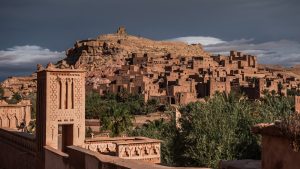
Arrive at Ait Ben Haddou, a UNESCO World Heritage site and historic caravan stop. Explore the ksar’s narrow streets and fortified homes while your guide explains how earthen architecture protected inhabitants and facilitated trade along the trans-Saharan routes. Learn how the ksar exemplifies the integration of strategic, cultural, and social elements in Berber architecture.
In the afternoon, continue to the Dades Valley, passing fertile oases and terraced landscapes. Your guide explains water management systems, irrigation methods, and the cultural significance of kasbahs. Learn about the valley’s historical role in facilitating trade and settlement in southern Morocco. Arrive for overnight stay in Dades Valley.
Day 5: Dades Valley – Todra Gorge – Merzouga (Sahara Desert)
After breakfast, depart the Dades Valley and follow the “Valley of a Thousand Kasbahs,” where ancient fortified homes line the route. Your guide explains how kasbahs were built to protect families, store crops, and assert tribal influence. Observe the dramatic contrast between palm groves and rocky cliffs, while learning about water management systems that sustained life in this arid region for centuries.
Continue to Todra Gorge, a magnificent canyon carved by the Todra River. Walking along the base of the cliffs, you gain insight into the geological forces that shaped the region, and your guide explains how local communities historically relied on the gorge for water, agriculture, and shelter. Learn how Amazigh tribes adapted to this environment and developed irrigation, storage, and farming techniques.
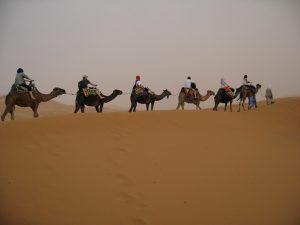
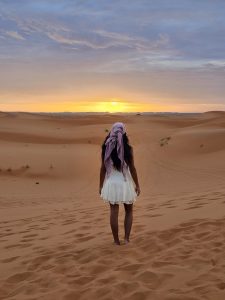
In the afternoon, journey toward Merzouga at the edge of the Erg Chebbi dunes. Upon arrival, mount camels and ride into the golden desert while your guide explains the Sahara’s historical role in trans-Saharan trade, migration, and nomadic life. Experience the serenity of the dunes at sunset and enjoy a traditional Berber dinner in a desert camp, surrounded by music and storytelling under the stars. Overnight in Merzouga.
Day 6: Sahara Desert Exploration
Wake early to witness the spectacular sunrise over the Erg Chebbi dunes. After breakfast, embark on a 4×4 desert excursion or walk across the sand, observing the desert’s flora and fauna. Your guide explains nomadic survival strategies, seasonal migration, and how local Berber communities adapted to life in such an extreme environment.
Visit a nomadic Berber family to learn about their daily routines, household structures, and oral traditions. Then proceed to Khamlia Village, home of the Gnawa musicians, descendants of sub-Saharan Africans. Your guide demonstrates how their music blends spiritual, cultural, and historical traditions, offering a living connection to Africa and Morocco’s trans-Saharan history.
In the afternoon, enjoy sandboarding, dune climbing, or a quiet walk through the desert. Your guide shares stories of ancient caravan routes linking Timbuktu to Moroccan cities, emphasizing the Sahara’s central role in trade and cultural exchange. Evening dinner by the campfire with traditional music. Overnight in Merzouga.
Day 7: Merzouga – Ziz Valley – Middle Atlas – Fes
Leave the desert and travel through the Ziz Valley, a fertile oasis lined with palm trees and small villages. Learn from your guide about ancient irrigation systems, date farming, and how these desert oases enabled life and trade along historic caravan routes.
Cross the Middle Atlas Mountains, observing cedar forests, rolling plateaus, and mountain villages. Your guide explains how the Amazigh communities rely on pastoralism, seasonal migrations, and forest resources. Discover the interaction between human settlements and the natural environment, and how these traditions have been maintained for centuries.
Arrive in Fes in the evening, Morocco’s spiritual and intellectual center. Your guide offers a preliminary introduction to Fes’ history as a hub of Islamic scholarship and Berber-Arab culture. Evening at leisure to relax or stroll in the medina. Overnight in Fes.
Day 8: Fes – Full-Day Guided Tour
Spend a full day exploring Fes el-Bali, the medieval medina and UNESCO World Heritage site. Visit Al-Attarine Madrasa and Bou Inania Madrasa, while your guide explains the city’s importance as a center of Islamic scholarship, theology, and jurisprudence. Observe how the layout of the medina supported trade, learning, and religion.
Walk through tanneries, artisan workshops, and carpet-weaving neighborhoods. Learn about traditional crafts, the guild system, and the preservation of skills passed down through generations. Your guide highlights the social and cultural role of artisans in sustaining Moroccan heritage and identity.
Explore hidden alleys, souks, and historical gates, learning how dynasties and rulers influenced Fes’ architecture, education, and spiritual life. Your guide emphasizes the balance between Berber, Arab, and Andalusian influences, offering insight into centuries of multicultural coexistence. Overnight in Fes.
Day 9: Fes – Chefchaouen (Rif Mountains)
After breakfast, depart Fes and travel north toward the Rif Mountains. The route passes fertile plains, terraced fields, and small Berber villages. Your guide explains how Andalusian refugees settled in northern Morocco during the 15th century, blending their architecture, language, and cultural practices with local Berber traditions. You learn how this fusion influenced town planning, building techniques, and community life, giving Chefchaouen its unique identity.
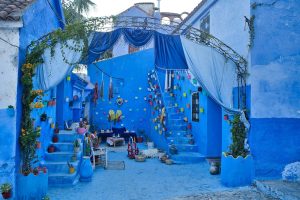
Upon arrival, explore Chefchaouen’s famous blue-painted medina with your guide. Walk through narrow winding streets, visiting artisan shops producing wool textiles, woven rugs, and pottery. Your guide explains the historical and spiritual significance of the blue color, believed to symbolize sky, heaven, and spiritual protection, while also reflecting the town’s Jewish and Andalusian heritage.
In the afternoon, visit the Kasbah and main plazas, learning about local governance, Berber family structures, and how Chefchaouen maintained autonomy under different dynasties. Your guide highlights how agriculture, craft, and trade shaped daily life in this isolated mountain town. Evening free to enjoy the peaceful ambiance. Overnight in Chefchaouen.
Day 10: Chefchaouen – Volubilis – Meknes
Leave Chefchaouen after breakfast, traveling toward Volubilis, Morocco’s ancient Roman ruins. Your guide explains the region’s history, including Roman colonization, urban planning, mosaics, and aqueduct systems. Observe the remains of basilicas, temples, and administrative buildings while learning how Roman influence integrated with local Berber culture.
Continue to Meknes, one of Morocco’s imperial cities, founded by Sultan Moulay Ismail in the 17th century. Explore Bab Mansour gate, the royal stables, and the medina. Your guide explains the architectural grandeur, defensive structures, and how imperial planning reflected political power and dynastic legacy.
In the afternoon, stroll through Meknes’ streets, observing local markets, artisanal workshops, and traditional crafts. Your guide highlights the city’s agricultural hinterland, historic trade routes, and role in connecting northern Morocco to central regions. Overnight in Meknes.
Day 11: Meknes – Rabat – Casablanca
Depart Meknes for Rabat, Morocco’s administrative capital. Visit the Hassan Tower, Oudayas Kasbah, and the Royal Palace. Your guide explains the city’s strategic location on the Atlantic, its defensive structures, and its historical role as a capital for different dynasties. Learn how Rabat blends Berber, Arab, and French architectural influences.
Continue to Casablanca, Morocco’s largest city and economic hub. Observe modern architecture, the Corniche, and the city’s evolution during the French protectorate. Your guide discusses urban planning, commercial expansion, and Casablanca’s role in modern Morocco.
Evening free to enjoy local cuisine or stroll along the Atlantic coastline. Your guide shares insights into Moroccan urban life, social diversity, and contemporary culture. Overnight in Casablanca.
Day 12: Casablanca – Marrakech
Begin the day with a visit to Hassan II Mosque, one of the largest mosques in the world. Your guide explains its architectural significance, modern construction techniques, and role in Morocco’s religious life. Learn how the mosque symbolizes both tradition and modernity.
After the visit, depart Casablanca and drive back to Marrakech, passing through fertile plains and small rural communities. Your guide explains agricultural practices, traditional irrigation, and how Berber and Arab populations maintain their cultural identity in modern Morocco.
Arrive in Marrakech in the afternoon. Enjoy a half-day guided exploration of the medina, visiting palaces, mosques, and bustling souks. Your guide explains the legacy of successive dynasties, how trade shaped the city, and the cultural importance of crafts, textiles, and spices. Evening free to relax in your riad. Overnight in Marrakech.
Day 13: Marrakech – Atlas Valleys & Berber Villages Excursion
Start the day with a scenic drive from Marrakech into the Atlas Mountains, passing terraced valleys, rivers, and traditional Berber villages. Your guide explains how mountain communities have adapted to high-altitude life over centuries, relying on terrace farming, livestock, and seasonal migration. Learn how Amazigh (Berber) culture preserves oral traditions, crafts, and social structures that have endured for generations.
Walk through the valleys and visit local families to observe traditional daily routines, such as bread baking, weaving, and farming. Your guide explains the symbolism in Amazigh clothing, pottery, and jewelry, connecting local crafts to spiritual beliefs, clan identity, and historical trade. Discover how communities balance tradition with modern pressures while maintaining strong cultural identity.
Return to Marrakech in the afternoon for a guided half-day exploration of the medina. Visit historic palaces, bustling souks, and artisan workshops. Learn about Marrakech’s evolution under the Almoravid, Almohad, and Saadian dynasties, and how the medina remains a vibrant center of commerce and culture today. Evening free to enjoy Moroccan cuisine or relax at your riad. Overnight in Marrakech.
Day 14: Departure from Marrakech
After breakfast, your driver-guide transfers you to Marrakech Menara Airport for your departure. Reflect on the journey that has combined history, culture, landscapes, and encounters with locals to give you a profound understanding of Morocco’s identity.
Tour Highlights
- Explore Marrakech, Fes, Meknes, and Casablanca, Morocco’s imperial cities.
- Discover the Sahara Desert with camel rides and overnight desert camp.
- Visit Essaouira, the historic Atlantic port city with medina and harbor.
- Walk through the blue streets of Chefchaouen in the Rif Mountains.
- Explore Volubilis, Morocco’s ancient Roman ruins.
- See High Atlas and Middle Atlas mountains, cedar forests, and Berber villages.
- Experience traditional Berber culture, crafts, and music.
- Guided tours of historic monuments, kasbahs, palaces, and medinas.
- Observe artisan workshops, tanneries, and local markets.
What’s Included
- 13 nights accommodation in riads, desert camps, and hotels.
- All private transportation in air-conditioned vehicle with driver-guide.
- Camel trek and desert camp experience in Erg Chebbi.
- Daily breakfasts and selected traditional dinners.
- Entrance fees to monuments, kasbahs, and UNESCO sites in the itinerary.
- Full-day guided tours in Marrakech, Fes, Meknes, Chefchaouen, and Essaouira.
- English-speaking professional guide throughout.
- Bottled water during travel days.
What’s Not Included
- International flights to and from Morocco.
- Lunches, drinks, and personal expenses.
- Travel insurance (recommended).
- Optional activities not mentioned in the itinerary.
- Tips for guides, drivers, and local staff.
Book This Tour
Ready to explore Morocco? Reserve your 14 days tour today and enjoy imperial cities, the Sahara Desert, Atlas Mountains, and coastal towns. Our professional guide and private transport will make your journey safe and comfortable.